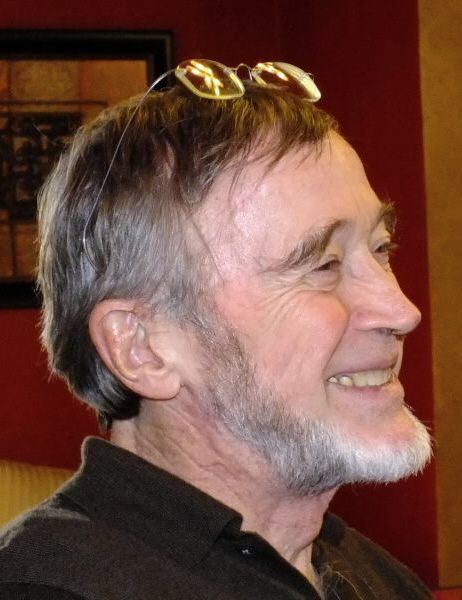
Henry Howard Hagedorn
April 04, 1940 - January 12, 2014
Obituary
!!UPDATE!!! - Family and Friends are invited to a Memorial Service for Henry Hagedorn that will be held on Sunday May 11, 2014 at 2:00 p.m. at the First Unitarian Society, 900 University Bay Drive. Madison.
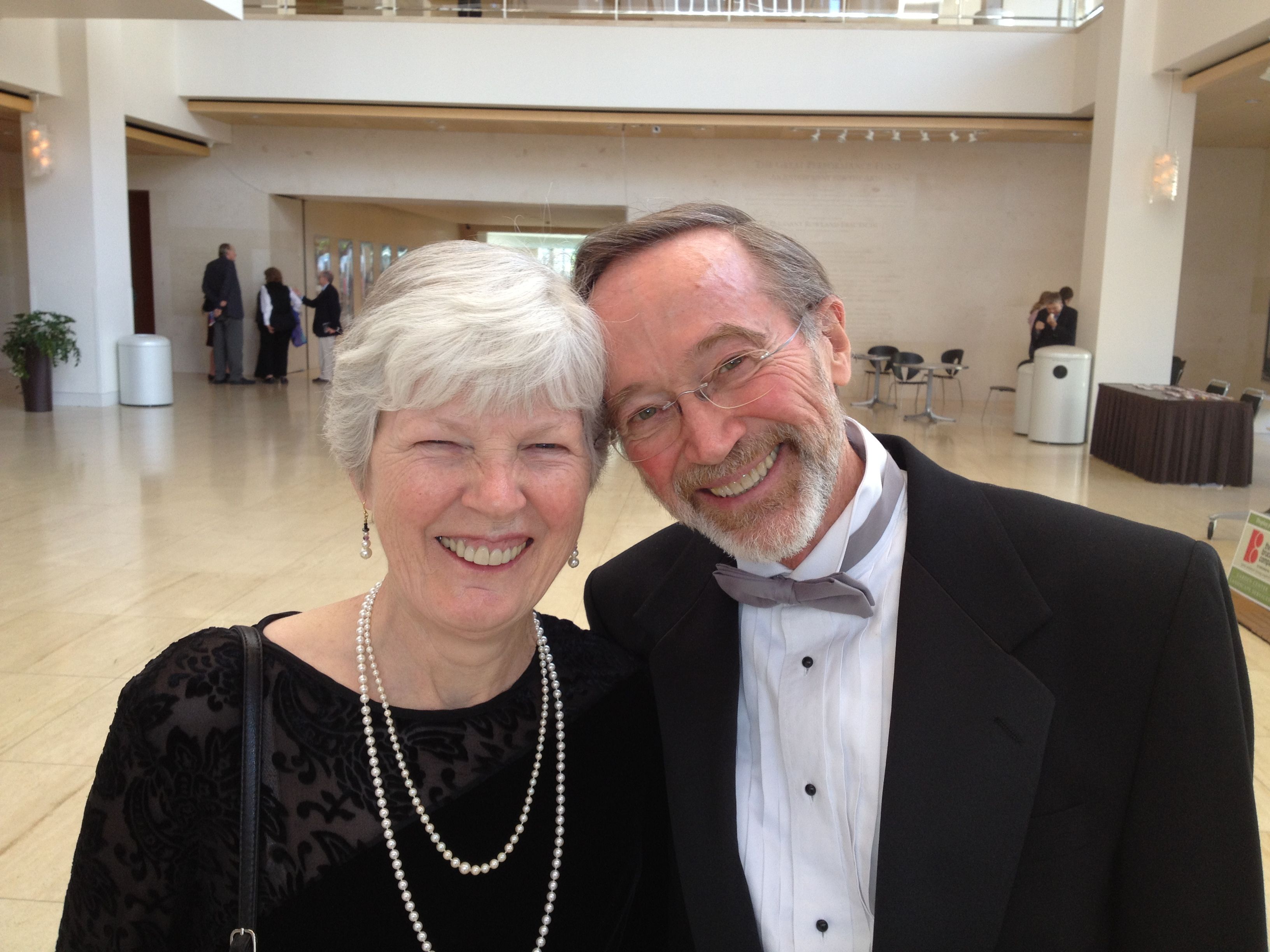
Henry Howard Hagedorn (d. January 12, 2014) was a husband, father, teacher, and scientist internationally recognized for his research on the reproductive physiology of mosquitoes. Born in Milwaukee on April 4, 1940, he lived all over the country and traveled all over the world in pursuit of knowledge.
Henry taught at the University of Massachusetts at Amherst, Cornell University, and the University of Arizona in Tucson, where he directed the Center for Insect Science for 5 years. He became a Fellow of the American Association for the Advancement of Science in 1988 and a Fellow of the American Entomological Society in 2012. Though he formally retired in 2005, retiring was not Henry's way, so he remained an adjunct member of the Department of Entomology at University of Wisconsin-Madison for the remainder of his life. In addition to his many publications, he founded the "Journal of Insect Science," an early and influential online open access journal. Henry made it his mission to seek out and give voice to serious scientists regardless of their means or country of origin, and to make their scholarship freely available to anyone with an interest in advancing knowledge about entomology.
Henry loved teaching all who wanted to learn, including the unsuspecting who only discovered they wanted to learn upon meeting him. His many accomplishments as a teacher included leading the development of Lesson Plans called "Using Live Insects in Elementary Classrooms" at U. of Arizona, and creating "Views of Life" which became one of the most popular courses for undergraduate non-biology majors that the U. of Arizona offered. He also established the "Butterfly Magic" exhibit at the Tucson Botanical Gardens which has become a yearly attraction.
A constant reader and avid music lover, Henry was active in the First Unitarian Society and its charities (feeding the homeless and organizing a mentoring program), the Madison Symphony Chorus, his book club, and the community in Cross Plains, Wisconsin.
He dedicated his life to education, so if you wish to make a contribution in his memory, Henry supported the University of Wisconsin-Madison’s "Great People Annual Scholarship Fund": UW Foundation, US Bank Lockbox 78807, Milwaukee, WI 53278-0807, http://www.supportuw.org
Henry was passionate about social causes. If you wish to make a contribution in his memory, please do so at First Unitarian Society (Fund to help homeless children)
Attn. Becky Schigiel, 900 University Bay Dr., Madison WI 53705, http://www.fusmadison.org
Or to Doctors without Borders, http://www.doctorswithoutborders.org/donate/tributes/
Henry is survived by Magdalene, his loving wife and companion of almost 50 years, his daughter Katrina and son Michael, his sisters Colette and Elizabeth, and brother Phillip, his many relatives and close friends, and the thousands of students whose lives he transformed.
Information regarding a memorial service will be forthcoming.
Gunderson West Funeral &Cremation Care
7435 University Ave
608-831-6761
www.gundersonfh.com
Events
Service
Sun May 11, 2014 @ 2:00 PM CDT
First Unitarian Society (Madison) • 900 University Bay Drive, Madison, WI null
Photos
Memories
G
Guest
Other •
California
G
Guest
Other •
Alaska
G
Guest
Other •
Henry Hagedorn
G
Guest
Other •
December '13 in Chicago
JV
Jan Veenstr
Other •
I first met Henry when I was a Master student in Wageningen and he visited us while he was on sabbatical in Germany in 1980. I was very impressed by his work on the egg development neurohormone in mosquitoes. Even though I could write a lot more about his scientific achievements, which are often underestimated, I will mostly remember Henry for his enormous generosity. Henry often used the term doctors father to refer to a PhD supervisor. I often felt he was a postdoctoral father to me, forgiving my failures and stimulating me in my scientific endeavors.
Coming from social democratic Europe, I had a somewhat hostile vision of the US, very capitalistic and often inhumane when I first arrived in Ithaca. It was really Henry who showed me a totally different face of the US, by simply telling my how much he would give to United Way every year. He made me realize that it does not have to be the state who takes care of the poor and needy, but that every individual can do his own part in helping to diminish suffering. Although I think the state has a role to play, I am very grateful to him for pointing out there is really no excuse for doing nothing yourself.
Henry was a real altruist and when you see someone like that almost everyday for a number of years you get infected by the same virus, even though viruses sometimes have a long incubation time. Henry was always open for discussion, any subject you were interested in, politics, science, family and even if your view was totally different from his, discussions always stayed pleasant and respectful. Without realizing it he did not only teach insect physiology but also how one could be good person. I have met very few people like Henry in my life and so he has made an ever lasting impression and I feel very privileged to have known this wonderful man.
I was deeply saddened by Henry's death and my most sincere condolences go to Mag, Michael and Katrina.
PK
Peter Ke
Other •
I first met Professor Henry Hagedorn in Guangzhou, China in the summer of 1989. Henry was recovering from a flu which he caught in Shanghai. He visited Zhongshan University and gave a lecture about his research. He was very thoughtful, knowing that most audiences don’t know English, he spoke slowly. All of his lecture slides are in both English and Chinese translation.
With Henry’s help, I came to the U. S. and worked in his lab at the University of Arizona in 1990. Henry picked me up at Tucson airport. He was generous to invite me to stay in his home for a few days. He helped me find an apartment, get my social security number, open a bank account, etc. He showed me how to get money from ATM, but not afraid that I saw his PIN. Henry’s countless helps are still vivid in my memory! Henry is not only my science mentor, but also like a father to me.
I remember that at one meeting, Henry was upset about my lab note and threw it into trash can. My lab note was actually written on a piece of paper towel. I was quite embarrassing. But it turned out to be my life-long lesson: I have been keeping writing good lab notebook since then.
The flu visited you again, and it turned out to be deadly this time. You had moved so fast that leave all of us behind. But someday we will finally meet you in heaven. We will certainly chat, sing, and laugh together again. You will tell us what you have done in the past years. We will tell you that the mosquitos don’t transmit diseases anymore. We miss your infectious laughing so much!
Zhaoxi (Peter) Ke